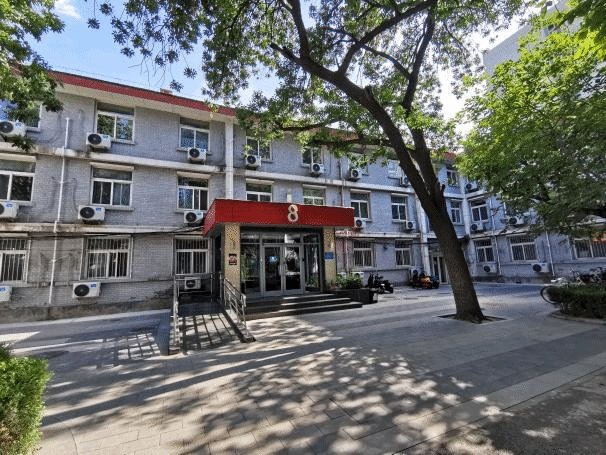
Housing is usually the first big unknown for a student admitted through Bridge to China: university dorm or private apartment? What does it actually cost? And above all, which administrative steps are mandatory as soon as you arrive? This guide answers those questions with verified data, with a particular focus on regional universities (outside Beijing and Shanghai) where most of our students are admitted.
Good news first: at a campus like Jinggangshan University or Jiangsu University of Science and Technology, getting a bed in a university dormitory is not a lottery. The real risk for a new arrival isn't ending up without a roof over their head — it's missing an administrative deadline in the first few weeks. That's the point this guide emphasizes the most.
University dormitories: the default option, and often mandatory
Contrary to a common impression left by generic guides focused on China's biggest cities, student housing shortages are mostly a Beijing problem. They mainly affect a handful of elite Beijing universities, where demand far outstrips the number of available rooms. On regional campuses, the situation is different: at Jiangsu University of Science and Technology (JUST), for example, the internal regulations go as far as forbidding students from living off-campus without explicit approval from the international college — a strict rule, but one that in itself confirms the university has the capacity to house all its foreign students.
Room type varies by institution. At JUST, international students are housed in double rooms with a private bathroom, air conditioning, and a water heater included, for around 4,500 to 4,900 RMB per year. At Jinggangshan University, two options coexist: a "Flat" for two or four people, noticeably cheaper, and a "School Hotel" individual or shared double room, more comfortable but pricier. The gap between the two options can be significant, so it's worth comparing before booking.

The basic furnishings — bed, desk, wardrobe, Wi-Fi, air conditioning — are fairly consistent across institutions. However, whether electricity, hot water, and internet are included in the base rate genuinely varies from one university to another: always double-check this specific point with your international student office, and budget an extra 50 to 300 RMB per month for possible additional costs (laundry card, AC top-up card, etc.).
Dormitory rules, on the other hand, are remarkably consistent across China: a curfew generally set between 11pm and midnight with mandatory sign-in for late returns, opposite-sex visitors banned from rooms, and an almost universal ban on cooking in the room (hot plates, kettles, rice cookers) for fire-safety reasons, enforced through periodic room inspections.
How to book your spot
There is no single procedure: some universities assign housing automatically, others require a separate application with specific booking windows, sometimes open only in February or August. The safest rule of thumb: contact your university's international student office within 48 hours of accepting your admission offer, and ask for the exact procedure, the deposit amount required, and the deadline. Application windows typically open 3 to 8 months before the semester starts, and some rooms fill up within weeks.
One often-overlooked advantage of dorm life: the mandatory police registration (covered below) is usually handled automatically by the university, whereas a student renting privately has to manage it entirely on their own. For a first stay in China, without yet speaking Mandarin, that's not a small detail.
Off-campus housing: an option from year 2 onwards
After a first year in the dorm, many international students choose to move off-campus: cooking for themselves, gaining more privacy, escaping the curfew, or living with friends. It's a viable option, but one that requires more vigilance than a university room.

The most common route is through major national platforms like Ziroom (自如) or Beike/Lianjia (贝壳/链家), which offer standardized listings with sometimes bilingual contracts, generally at a rent 10 to 20% above market rate in exchange for more security. The platform 58.com (58同城) is cheaper but has a reputation for being less reliable. University or expat WeChat groups and local real-estate agencies (房产中介, charging a commission of roughly half a month's to a full month's rent) round out the landscape.
Rents vary significantly by city: expect 2,000 to 4,000 RMB/month for a shared room and 3,500 to 7,000 RMB/month for a studio in Beijing or Shanghai, versus 1,500 to 4,500 RMB/month for a studio in a second-tier city like Nanjing, Hangzhou, or Wuhan. In the more regional cities where universities like Jinggangshan (Ji'an, Jiangxi) or JUST (Zhenjiang, Jiangsu) are located, rents are generally even lower, although student-specific data for these exact cities is scarce — a studio outside the city center there tends to run around 950 to 2,000 RMB/month based on general local cost-of-living estimates.
The standard payment convention in China is "yi ya san fu" (押一付三): one month's deposit, plus three months' rent paid upfront. Leases typically run for one year. The deposit must legally be returned within 7 to 14 days after move-out, minus any documented actual damage — in practice, how reliably that happens depends a lot on the landlord, which is why it's worth documenting everything in writing and with photos from day one.
Pitfalls to avoid
The most commonly reported scam is payment before verification: some landlords ask for a transfer before handing over the keys, which then never arrive; others pose as a "roommate" who collects a deposit and disappears. A few simple rules greatly reduce the risk:
- Never transfer money before visiting the property in person, meeting the landlord, and receiving keys that actually work.
- Ask for a copy of the landlord's ID and check that it matches the name on the contract.
- Get a written contract stating the exact address, along with a receipt for every payment made.
- Change the locks as soon as you move in.
Some landlords also simply refuse to rent to foreigners. It's not universal, but it's worth expecting, and it's wise to plan several viewings before landing on the right place.
Police (PSB) registration: the legal requirement you must never skip
This is, by far, the most important point in this guide — and the most underestimated by new arrivals. Chinese exit-entry administration law requires every foreigner staying somewhere other than a hotel to register with the local police station (派出所, paichusuo) within 24 hours of arriving at their place of residence. This 24-hour rule is set by law itself and confirmed by China's National Immigration Administration; the "48 hours" variant sometimes cited on unofficial blogs is incorrect and should not be relied on.
In practice, the process differs depending on the type of housing:
- In university dorms, the housing service or international student office usually handles registration by collecting students' passports, and issues a receipt (a "Registration Form of Temporary Residence," 临时住宿登记表) in return, which should be kept safe. Note: this automatic handling isn't 100% guaranteed at every institution — always ask for written confirmation rather than assuming "the university takes care of it."
- In private housing, it's up to the student to go to the police station, ideally with the landlord, bringing a passport, visa, signed lease, and the landlord's ID.
Failing to register can lead to a warning and a legal fine of up to 2,000 RMB. Not having this proof of registration also frequently causes problems during later visa or residence permit renewal procedures.
This 24-hour requirement should not be confused with a separate step that applies specifically to X1 visa holders (study programs longer than 180 days): converting that visa into a student residence permit, which must be done within 30 days of arrival. Missing this deadline can lead to fines of up to 10,000 RMB and irregular-stay status. The police registration receipt is in fact one of the documents required for this conversion — one more reason not to skip it. Holders of an X2 visa (stays of 180 days or less) remain subject to the 24-hour registration requirement but don't need to apply for a residence permit.
A new registration is required every time you change address (dorm to private housing, moving cities) and, as a precaution, after every return from travel abroad. One last practical tip: arriving well before the official start date is generally not a good idea. Some universities deny dorm access to unapproved early arrivals, which delays registration even though the 30-day countdown has already started.
What does housing in China really cost?
Housing is by far the most variable line item in a student budget in China. Two factors determine almost everything: scholarship status, and the host city.
For a China Scholarship Council (CSC) scholar, the standard monthly stipend is 2,500 RMB for undergraduates, 3,000 RMB for master's students, and 3,500 RMB for PhD students, on top of full coverage of tuition, dorm housing, and medical insurance. Housing then accounts for 0% of the actual monthly budget.
For a self-funded student in a university dorm in a regional city, housing (roughly 300 to 500 RMB/month) remains a modest share of the total budget. Renting privately in a major city like Beijing, on the other hand, housing can account for 55 to 65% of a total monthly budget of 4,500 to 9,500 RMB. On an annual basis, a dorm room typically costs about six times less than an equivalent off-campus rental.
One important distinction not to miss: the "proof of funds" amount required for the student visa (around USD 2,500 per year, roughly 17,500 RMB) is a minimum administrative threshold, not a realistic budget. Actual cost of living, housing included, tends to run higher — it's safer to plan generously rather than base your year's budget on that figure alone.
For reference on everyday costs outside housing: a university canteen meal costs 10 to 15 RMB, versus over 1,000 RMB per month for a student who regularly eats out. Local transport generally costs between 70 and 350 RMB per month depending on the size of the city.
Settling in well from day one
Chinese dorms provide basic furnishings (bed, desk, wardrobe, air conditioning, Wi-Fi), but almost never bedding, a pillow, towels, or a desk lamp. These items are typically bought on arrival, at a welcome-fair sale during orientation or via apps like Taobao — no need to bring them from home.
China's electrical current is 220V/50Hz, with type A, C, and I plugs. A universal adapter is enough in most cases, since modern phone and laptop chargers are generally dual-voltage. A power strip is also worth bringing, as dorm rooms often have few wall outlets.
The typical first week follows a fairly logical sequence:
- Days 1-2: settling into the room, buying basic supplies
- Days 2-3: getting a Chinese SIM card (essential for everything else: bank account, WeChat, Alipay, campus Wi-Fi)
- Days 3-4: opening a Chinese bank account
- Days 3-5: university administrative registration, medical check-up
- Days 5-7: police registration and starting the residence permit application
One last thing to plan for depending on your region: heating. In northern China, dorms generally come with central heating included in winter. In the south, air conditioning doubles as heating instead, and its use is often billed through a separate top-up card.
Key takeaways
- On a regional campus, the university dorm is the default option: book it as soon as you're admitted, ideally within 48 hours.
- Private housing is a viable option from year 2 onward, but requires caution: never pay before seeing the place and meeting the landlord in person.
- Police registration within 24 hours is not optional: always get a written receipt, whether the university or you handles it.
- X1 visa holders have 30 days to convert their visa into a student residence permit.
- The visa's "proof of funds" figure is not a realistic budget: plan a margin, especially if renting privately in a major city.
These steps can seem like a lot, but they're well mapped out once you know the right order to tackle them in. That's precisely one of the roles Bridge to China plays: preparing every student for these first few weeks before they even leave, so that settling in China goes smoothly, without administrative surprises.